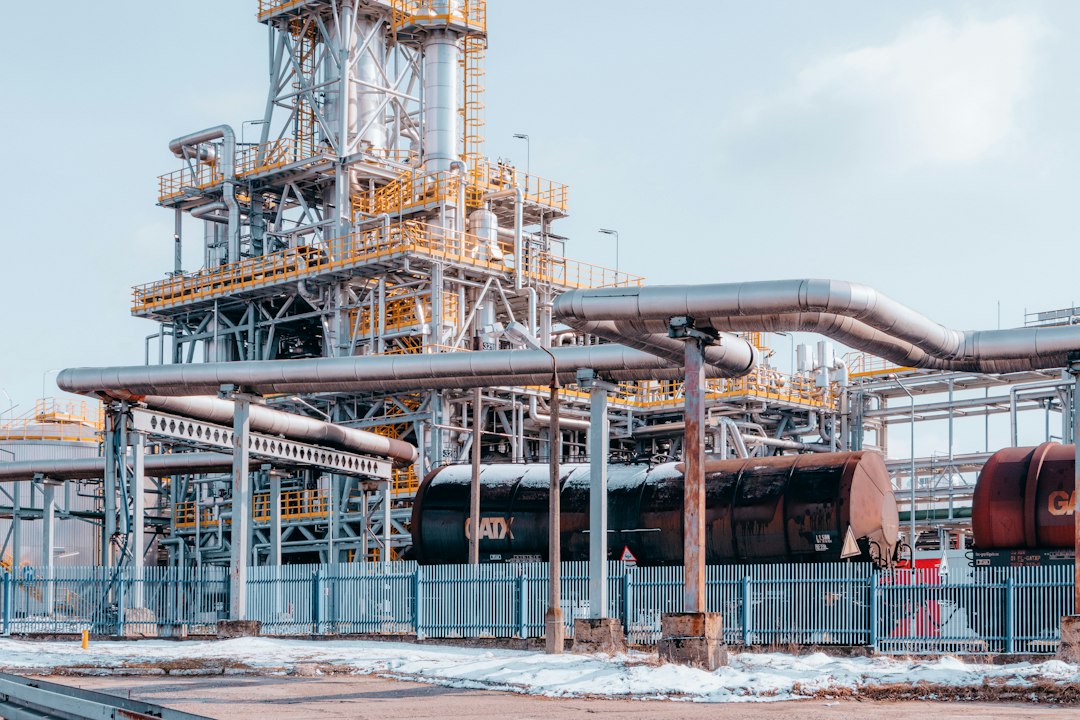
This week brought no headline announcements in carbon capture or CO2 utilisation—yet the regulatory and technical scaffolding for Power-to-Liquid e-fuels continues to tighten. RSB’s RED III compliance guidance for renewable fuel operators and Lloyd’s Register’s maritime decarbonisation analysis both underscore a shared reality: feedstock sourcing, certification frameworks, and CO2 purity remain the engineering bottlenecks that will define whether plants meet ReFuelEU blending mandates and RED III sustainability criteria by 2030.
30 April 2026
RSB RED III compliance guidance release date
26 May 2026
Lloyd’s Register maritime fuels report publication
2030
Key ReFuelEU and RED III compliance horizon
Mid-May 2026
White hydrogen discovery in Canadian Shield reported
- No major carbon capture or CO2 utilisation project news
This reporting period saw no announcements of new capture plants, direct-air-capture scale-ups, or CO2 pipeline infrastructure. The quiet reflects a sector still grappling with capital costs, capture energy penalties, and CO2 transport economics before first-generation facilities reach full throughput. - RSB publishes RED III compliance guidance for biofuel and renewable fuel operators
Released 30 April 2026, the Roundtable on Sustainable Biomaterials framework clarifies certification pathways for e-fuels using captured CO2 as feedstock. Operators must document the origin, purity, and lifecycle emissions of CO2 streams to qualify under RED III sustainability thresholds and access the renewable fuel of non-biological origin (RFNBO) category. - Lloyd’s Register issues maritime decarbonisation report analysing hydrogen-based fuels and methanol
The 26 May 2026 publication from the Maritime Decarbonisation Hub examines transition scenarios for biofuels, e-methanol, and ammonia. Each pathway relies on captured CO2 or green hydrogen, underscoring that shipping compliance with FuelEU Maritime mandates hinges on upstream capture and electrolysis infrastructure—not vessel retrofits alone. - White hydrogen discovery in Canadian Shield highlights geological CO2 as a potential co-product
Mid-May 2026 research confirmed natural hydrogen in billion-year-old rock alongside nickel, copper, and diamond deposits. While not a carbon capture story, the find reminds engineers that geological CO2 reservoirs often co-occur with mineral and gas deposits, potentially offering lower-cost feedstock sources for future Power-to-Liquid plants if purity and transport can be solved. - Regulatory calendar tightens for operators lacking certified CO2 supply chains
With RED III obligations live and ReFuelEU blending mandates rising through 2030, e-fuel project developers without contracted, certified CO2 feedstock face compliance and offtake risk. The engineering challenge is not only capture efficiency but also documenting mass balance, avoiding double-counting, and securing third-party audits—all prerequisites for eligibility under the RFNBO framework.
Bottom Line
A quiet week for carbon capture headlines does not mean a pause in compliance pressure. RSB’s RED III guidance and Lloyd’s Register’s maritime analysis both confirm that feedstock certification, CO2 lifecycle accounting, and pipeline infrastructure are the engineering bottlenecks standing between pilot plants and bankable, mandate-compliant e-fuel production at scale. Operators without contracted, auditable CO2 supply by 2028 will struggle to meet ReFuelEU and RED III obligations in 2030 and beyond.
Sources
- Liquid e-fuels for a sustainable future: A comprehensive review of production, regulation, and technological innovation
- E-Fuels Market Size, Competitors, Trends & Forecast to 2032
- E-fuels: Production, Applications, and Future – ENGIE
Featured image via Unsplash.